

What to Do if You Have an Arrest Warrant in Miami?
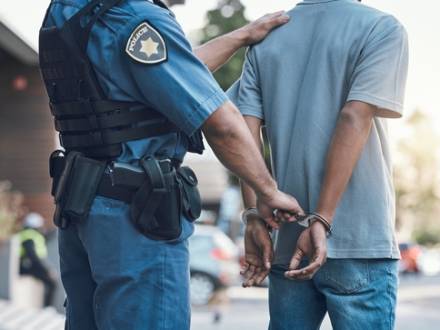 If you find out there is a warrant for your arrest in Miami, the worst thing you can do is wait. A warrant does not expire or go away on its own. Under Florida law, arrest warrants and bench warrants stay active until a judge recalls them or you are taken into custody. That means a police officer can arrest you at a traffic stop, at work, or at home. Waiting only narrows your options and puts you at risk of a surprise arrest.
If you are dealing with a warrant in 2026, a Miami, FL criminal defense attorney can help you understand your options.
How to Check Whether You Have a Warrant in Miami-Dade County
Many people do not know they have a warrant until they are stopped by police for something unrelated. You can check your status before that happens. The Miami-Dade Clerk of the Court and Comptroller offers an online criminal case search that allows you to look up case information by name, free of charge.
The Florida Department of Law Enforcement also maintains a public warrant database through the Florida Crime Information Center. Not every active warrant appears in these systems right away, particularly if it was recently issued. If you missed a court date or know an investigation was underway, contact a criminal defense lawyer before relying on an online search alone.
Three Types of Warrants in Florida and What Each One Means for You
Each type of warrant works differently and calls for a different response.
Arrest Warrants in Florida
Under Florida Statute 901.02, a judge issues an arrest warrant after finding probable cause, meaning enough evidence to reasonably believe a crime was committed. Law enforcement is then authorized to arrest that person on sight, anywhere, at any time. In many cases, the person named in the warrant has no idea it exists until officers show up.
Bench Warrants in Miami-Dade County
A bench warrant is issued when a defendant fails to appear for a scheduled court date on a misdemeanor charge. County court judges issue these. They are serious, but in many cases, a criminal defense attorney can file a motion to withdraw the warrant and reschedule the court date without you being arrested first.
Alias Capias Warrants for Felony Charges
An alias capias is the felony equivalent of a bench warrant. A circuit court judge issues one when a defendant misses a court date on a felony charge. Unlike many misdemeanor bench warrants, a felony alias capias may be issued with no bond. In that case, you must see a judge before release can be considered. A judge must set a new bond, and if you have a history of missing court appearances, the judge may deny bond entirely.
What Happens If You Ignore an Arrest Warrant in Miami?
Ignoring a warrant does not make it disappear; it puts your future in someone else's hands. The U.S. Marshals Service arrested or cleared 73,323 fugitives in 2025, an average of 293 per day. That level of enforcement makes clear that warrants are not paperwork that gets lost in the system. If you are stopped for a minor traffic violation and a warrant comes up, you will be arrested on the spot. You will have no say over the timing, the location, or the conditions of your release.
Addressing a warrant proactively, with an attorney, gives you a very different outcome. In many cases, an attorney can contact the court or prosecutor to arrange a voluntary surrender on your schedule. Bond issues can often be addressed in advance, and judges usually respond better when someone comes forward voluntarily. In 2026, Miami-Dade felony bond hearings are held twice daily on weekdays at the Richard E. Gerstein Justice Building, with limited hearings on weekends and holidays. An attorney who knows the schedule can help reduce unnecessary time in custody.
Contact a Miami, FL Criminal Defense Attorney Today
If you think you have an arrest warrant out against you, you need answers. Stroleny Law: Criminal Defense Attorney is a former Assistant State Attorney in Miami-Dade County with nearly 400 five-star reviews and a practice rooted in Coconut Grove. He has worked on both sides of the criminal justice system and understands how prosecutors build their cases.
We are available 24 hours a day, seven days a week. Call 305-615-1285 to schedule a free consultation with a Miami, FL criminal defense lawyer today.
Contact Us
Connect with Us and Take the First Step Toward Justice
To get the legal help you need in your criminal case, reach out to our firm today. We will provide you with a free consultation where our attorney will review your case and advise you of your legal options.
66 W Flagler St., Suite 1005
Miami, FL 33130
P 305-615-1285

Please fill out the form below or call 305-615-1285 to contact us.



From our Miami office, Stroleny Law: Criminal Defense Attorney serves clients across the city, including Allapattah, Brickell, Coconut Grove, Coral Way, the Design District, Downtown Miami, Edgewater, Liberty City, Little Haiti, Little Havana, Overtown, the Upper East Side (MiMo District), and Wynwood. Our reach also extends throughout Miami-Dade County, representing clients in Aventura, Coral Gables, Doral, El Portal, Florida City, Hialeah, Homestead, Key Biscayne, Miami Gardens, Miami Springs, North Miami, North Miami Beach, Opa-locka, Pinecrest, South Miami, Sunny Isles Beach, Sweetwater, and West Miami.
Results listed are not a guarantee or indication of future case results.
© 2026 Stroleny Law: Criminal Defense Attorney
66 W Flagler St., Suite 1005, Miami, FL 33130
305-615-1285
